
FABRIC & SLATTED BLINDS / LONDON
Blinds Cleaning London
We provide blinds cleaning in London with the blind type, material and condition considered before any treatment is agreed. Fabric folds, vertical vanes and rigid slats need different attention. Tell us what is fitted at each window and how it can be reached, and we will discuss appropriate cleaning and practical handling.
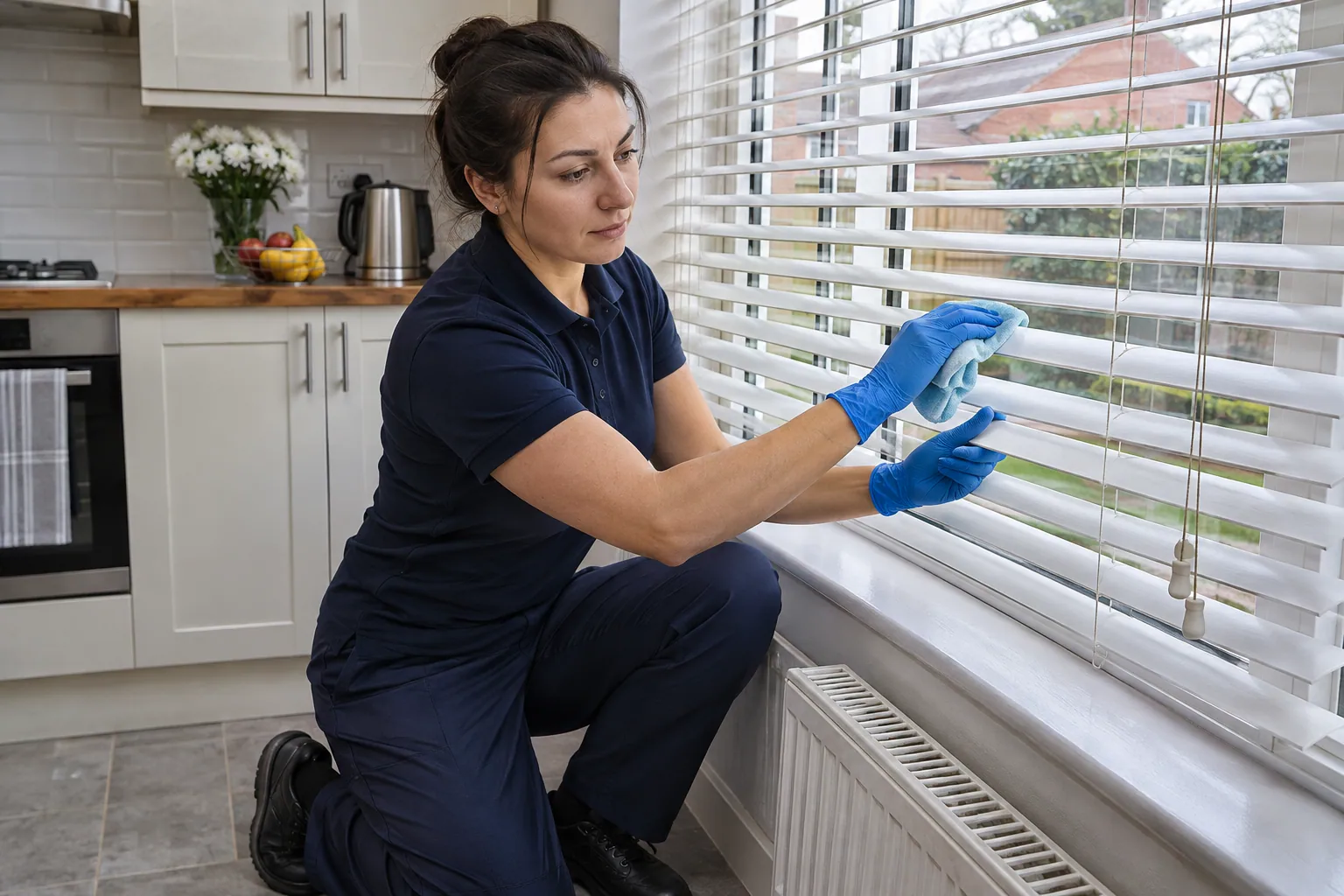
DIFFERENT BLIND MATERIALS
Can you assess different blinds at one London property?
Yes. List the blind types and number of windows, and share photographs where possible. A fabric Roman blind, roller blind and slatted Venetian blind should not be treated as interchangeable. We review material, condition and access before discussing the suitable approach for the particular blinds you want cleaned.
CHOOSING THE BLIND TREATMENT
Will all blinds be steam cleaned?
No universal steam method is appropriate for every blind. Wood, metal, fabric, coatings and mechanisms need different consideration. We assess the material and care information before agreeing treatment, and we do not promise to wash or saturate a blind simply because another textile in the room can be wet cleaned.
- Blind type, material and care information reviewed
- Slats, folds and vanes described separately
- Suitable attention to accessible dust and marks
- Mechanisms and fragile parts considered before handling
- Removal and refitting discussed rather than assumed
Start with the blind type at each window
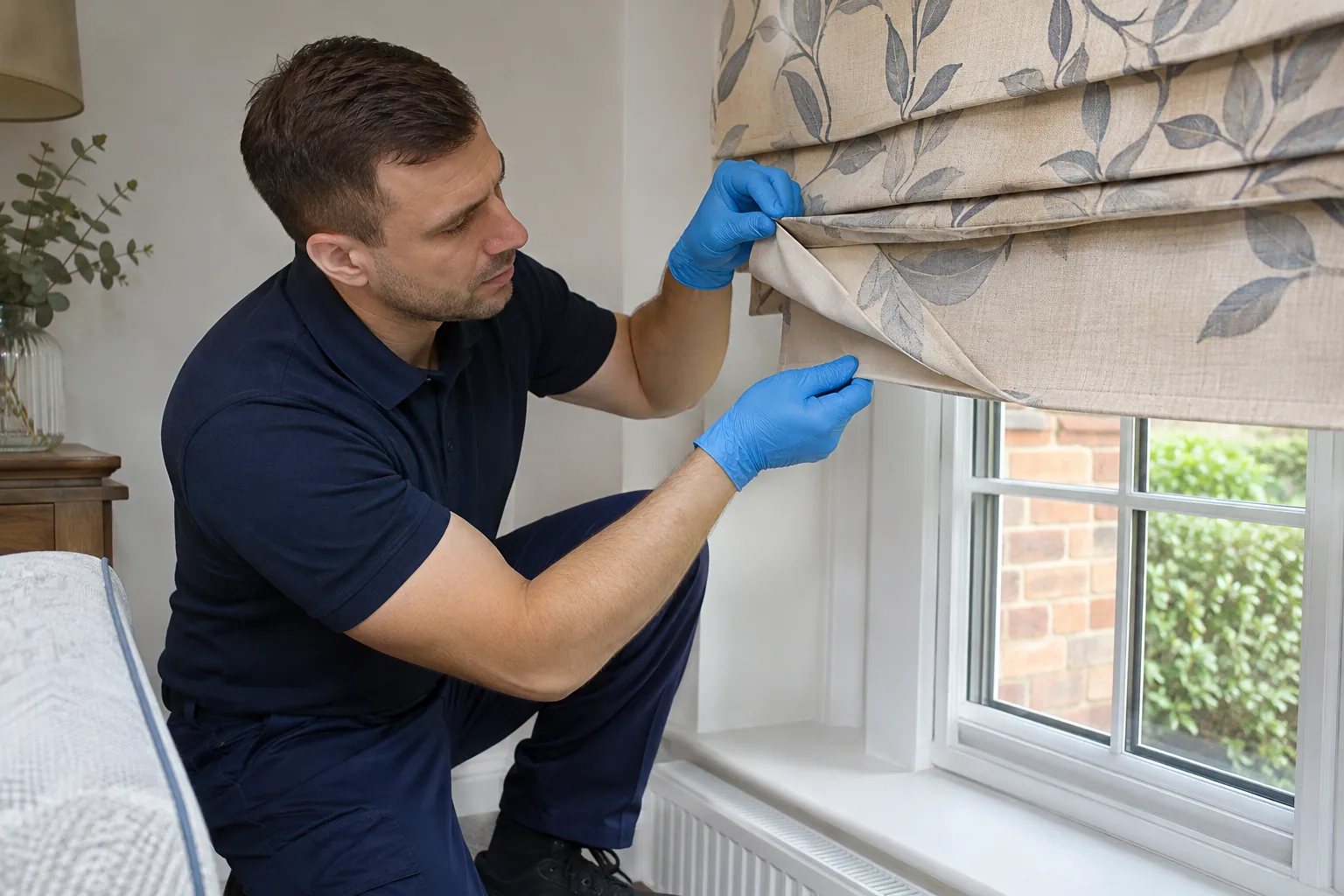
Blinds describe a broad group of window fittings, not one uniform fabric item. A Roman blind has folds and a backing, a roller blind has a continuous surface, and vertical blinds have separate hanging vanes. Venetian designs may have wood, metal or another rigid material. We ask you to identify what is installed so we can discuss the cleaning request in terms of the actual surfaces.
Count the blinds rather than only the rooms. A bay window may have several separate fittings, while a wide opening may have one larger blind. Tell us approximate dimensions and whether the blinds are recessed, free-hanging or obstructed by furniture. Photographs are useful when the material or design is uncertain. We identify each requested blind and avoid assuming that every window covering at the property forms part of the same booking.
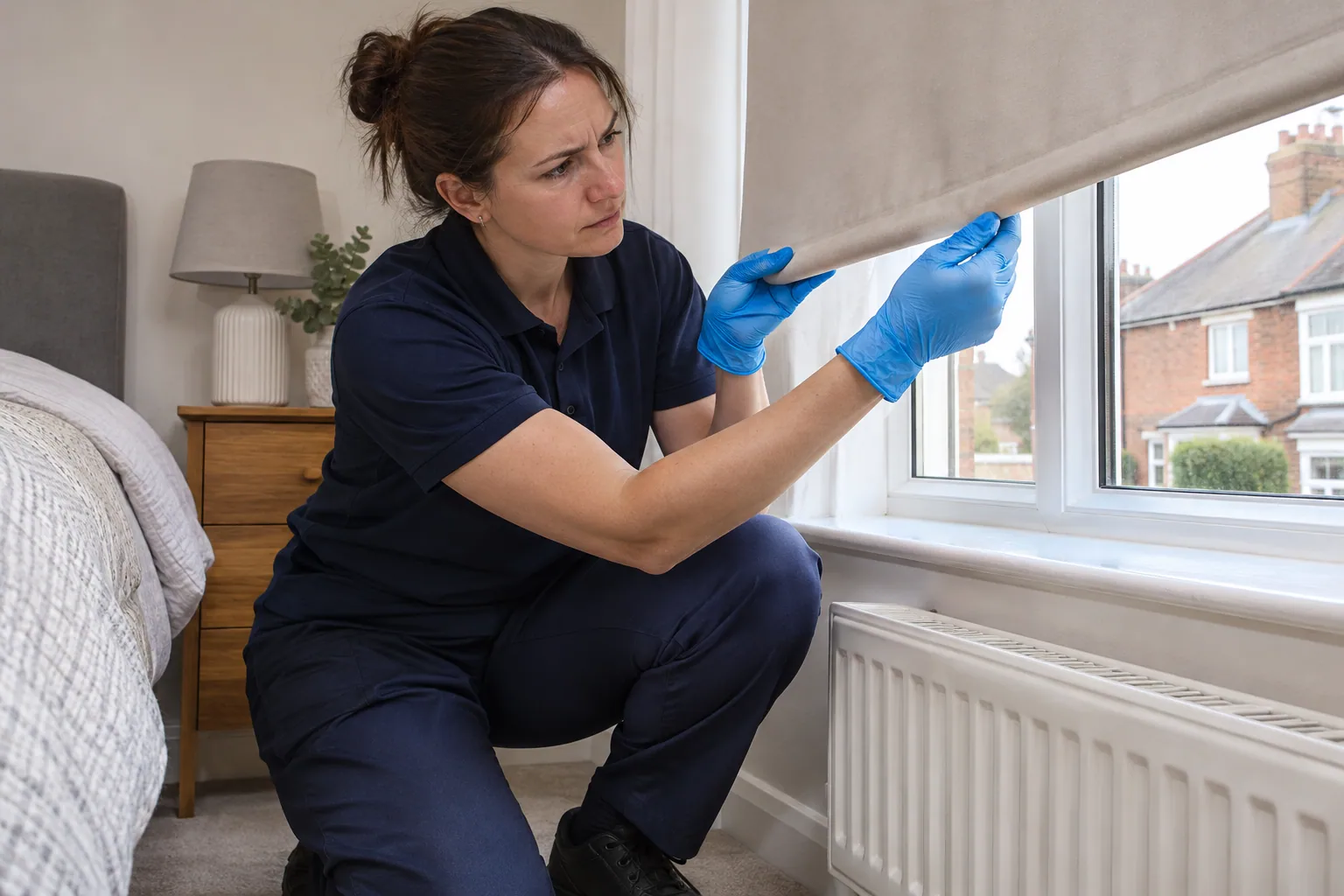
Material and coatings determine what can sensibly be treated
We look at the surface material, available care information and existing condition before agreeing an approach. Fabric backing, applied coatings, decorative borders and the state of the edges can all matter. A blind’s appearance alone does not establish that it is washable. Tell us about manufacturer instructions, previous cleaning or a treatment that has changed how the surface feels.
We do not apply one steam or wet-cleaning method across wood, metal and fabric blinds. Excess moisture or unsuitable products can be inappropriate for some materials or constructions, so the decision follows assessment. For a delicate blind or an uncertain material, we explain the suitable attention and any limitations before beginning. The discussion concerns cleaning accessible surfaces; it does not automatically include dismantling the blind, soaking its components or treating the internal mechanism. We confirm a suitable approach for the particular items requested.
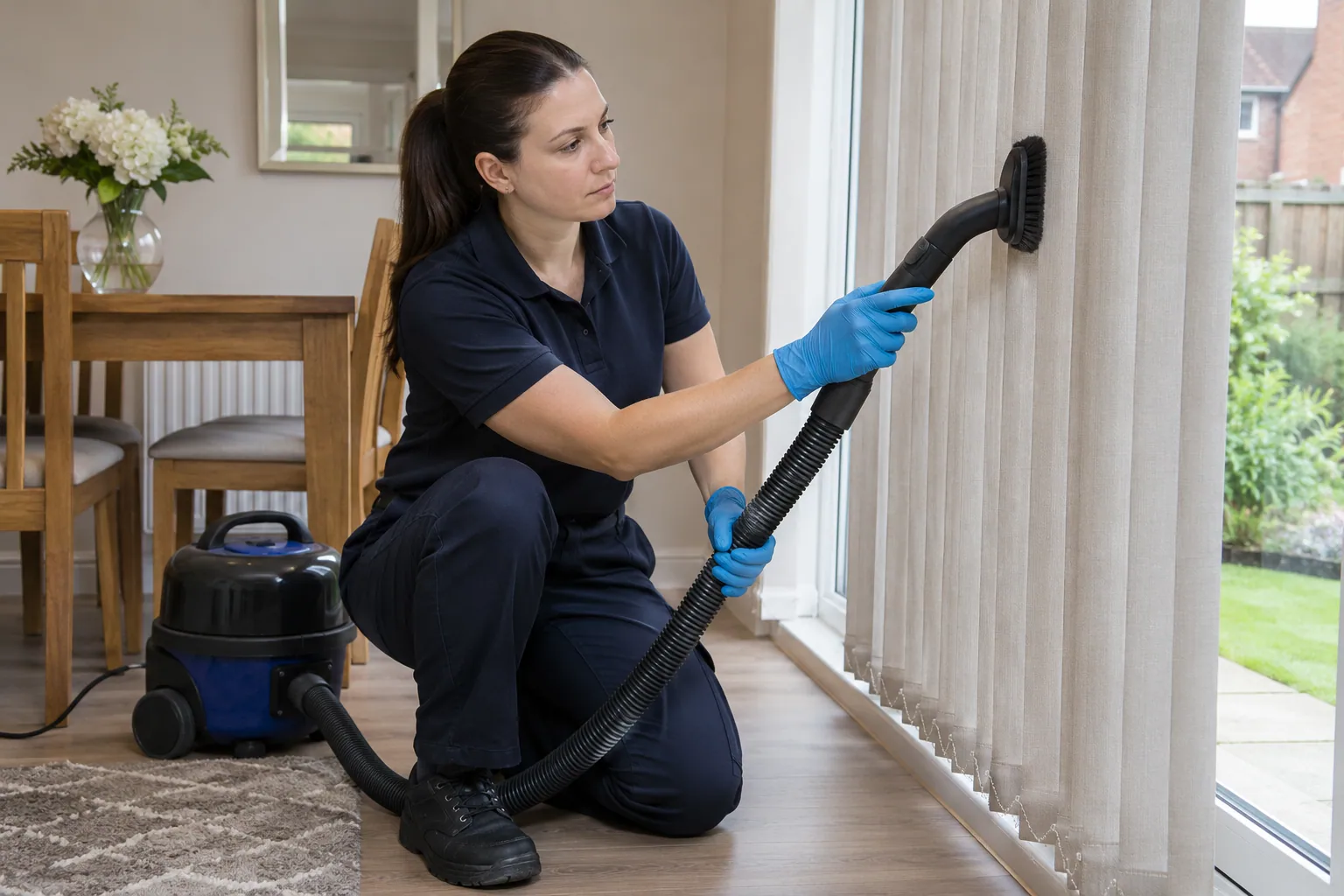
Identify your blind before requesting a quote
| Type | What to describe | Particular consideration |
|---|---|---|
| Roman | Fabric, folds and backing | Layers and care information |
| Roller | Surface material and approximate dimensions | Coating, edges and any marks |
| Vertical | Vane material and quantity or width | Individual components and attachments |
| Venetian | Wood, metal or other slat material | Finish and suitability for moisture |
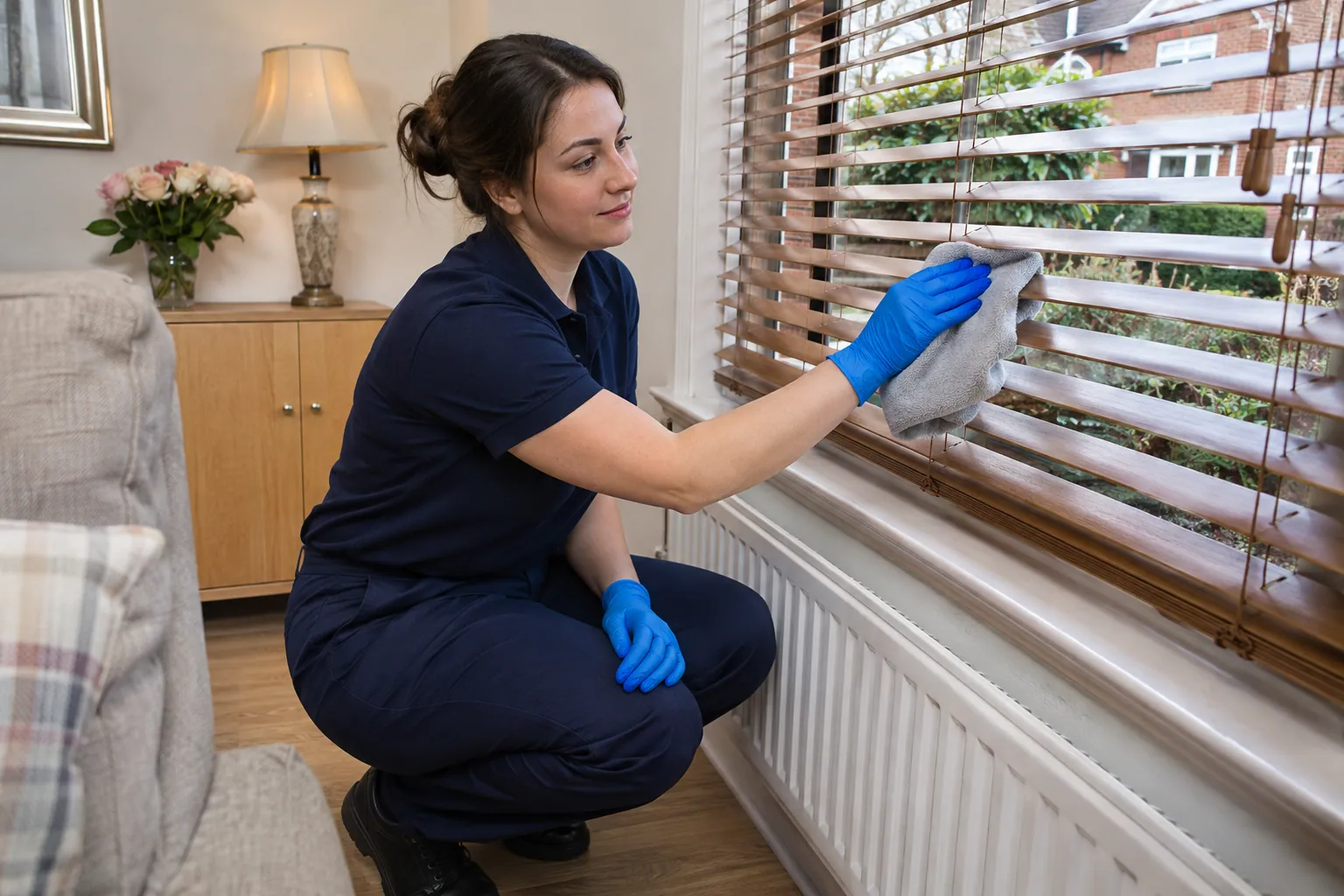
Dust on slats differs from marks on fabric folds
The concern may be loose dust along the horizontal surfaces, soil on a handled edge or a visible mark on a fabric panel. Tell us where it appears and whether the blind is in a kitchen, bedroom or another room. The location can help describe the problem, but we still assess the actual material. If something has spilled or a household cleaner has been applied, identify it when enquiring.
We give suitable accessible areas the agreed attention without promising complete stain removal. Fabric can fade, rigid slats can be scratched and finishes can change with age or previous treatment. Cleaning cannot reverse those changes or restore a warped component to its original shape. A dark patch may be deposited soil or a change in the surface itself. We explain evident limits and distinguish a cleaning request from a repair to the blind’s fabric, coating or individual slats.
Cords, chains, rails and existing damage need careful discussion
Before the visit, tell us whether the blind operates normally. A stiff chain, broken cord, bent slat or loose headrail is relevant even if the main request is cleaning. We do not assume our cleaners can operate a damaged fitting or remove parts to make it work. Please point out fragile vanes or loose attachments so their condition is understood before the agreed surface treatment begins.
Blinds cleaning is separate from servicing a motor, replacing cords, adjusting tension or repairing a damaged track. Removal and refitting are also not assumed. Explain how the blind is installed, its height and whether access to the headrail is obstructed. We discuss what handling is practical before confirming the appointment. Do not dismantle a difficult fitting in anticipation of the service; the agreed arrangement should be clear to you and our team before work is carried out.
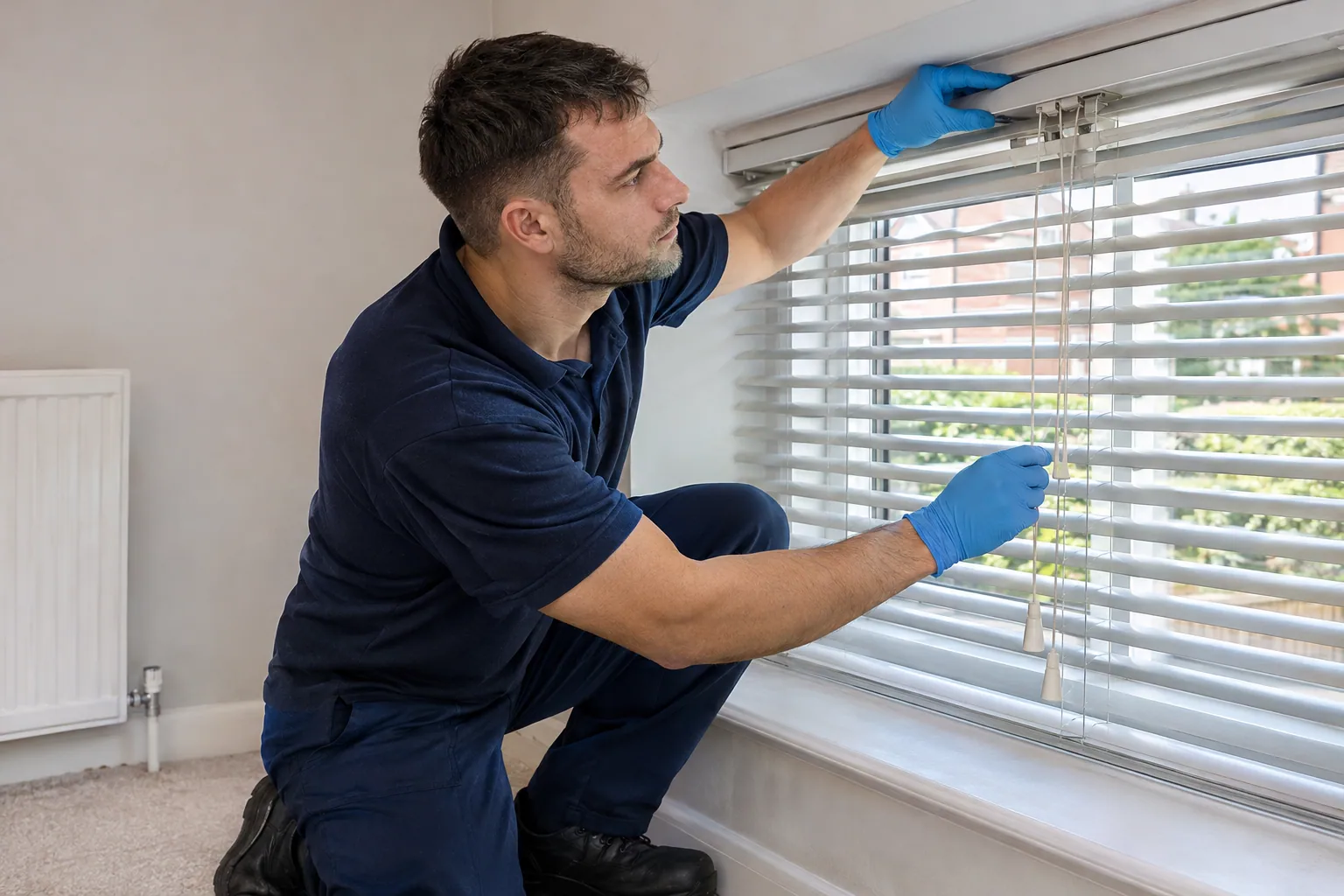
How We Carry Out Your Blinds Cleaning
Identify the blinds and condition
We confirm the booked items and review their material, design and care information. You can point out marks, damaged slats or operating problems so the practical limits are understood before treatment is considered.
Agree access and handling
We examine the window arrangement and reachable surfaces. Any removal or refitting must be specifically discussed, while damaged mechanisms, fixed furniture and high fittings are considered as part of planning the cleaning visit.
Clean using the assessed approach
We carry out suitable attention to the agreed accessible slats, fabric or vanes. The method follows the material and condition rather than applying steam or water indiscriminately across different types of blind.
Review the result and relevant advice
We review the treated surfaces and explain any relevant aftercare. You can ask about remaining discolouration or existing damage, with cleaning distinguished from repairing cords, rails, motors or other parts of the fitting.
Cleaning concerns and existing faults
| Observation | Tell us | What we distinguish |
|---|---|---|
| Dust on slats | Location and material | Suitable surface cleaning |
| Marked fabric | Cause and prior treatment | Staining versus fabric change |
| Bent or warped parts | Which components are affected | Cleaning versus physical repair |
| Stiff or broken controls | Chain, cord or motor concern | Surface treatment versus mechanism servicing |
Making the window area accessible in homes and business premises
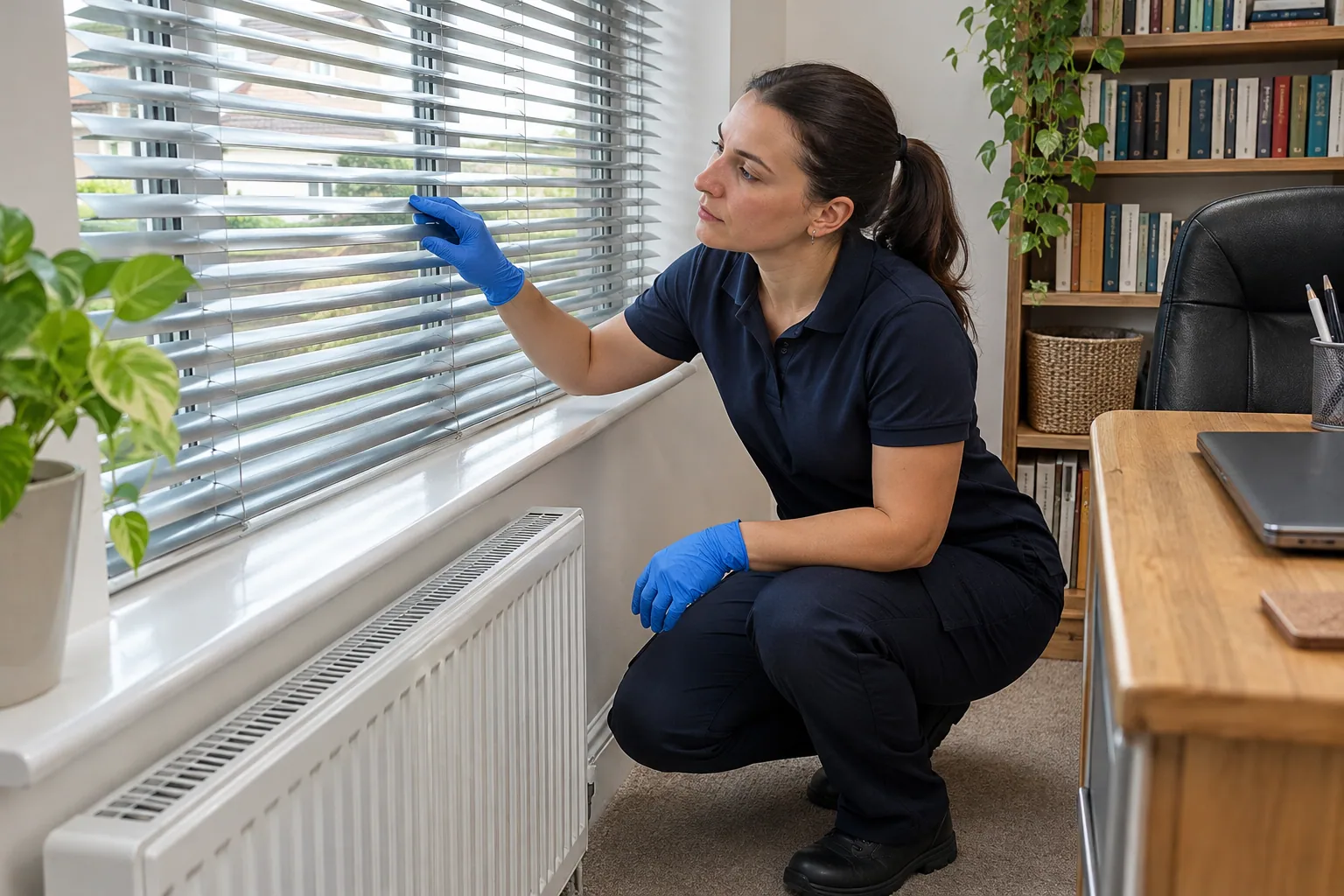
Clear personal belongings and small loose items from the window area. Tell us about furniture, kitchen worktops or other fixed features that limit access. A blind over a sink or behind a large desk may require a different practical arrangement from one at an open sitting-room window. We agree the reachable areas rather than assuming heavy furniture can be moved or every fitting can be reached from the floor.
For London flats, include information about entry systems, stairs, lifts and parking. For a business property, explain when the window area can be made available and whether blinds are used for privacy during normal operations. We discuss timing and access before booking. If you want glass cleaning too, identify it as a separate service so the order can be considered. Moving blinds for window work does not automatically mean dismantling them or including their cleaning in the glass appointment.
Planning access and handling
| Situation | Useful detail | What we agree |
|---|---|---|
| High or recessed fitting | Height and photographs | Reachable areas and handling |
| Obstructed window | Desk, sink or heavy furniture | A practical working arrangement |
| Privacy requirement | When the blind is next needed | Relevant timing and aftercare |
| Combined glass work | Windows also requested | Separate services and order of work |
An itemised quote and aftercare for the method agreed
A useful enquiry includes your London postcode, blind count, type, dimensions where known and photographs of materials or marks. Add care instructions and details of damaged parts. We can then discuss a suitable treatment and the handling arrangement. We quote for the actual blind count, construction and handling required. List each roller blind or Venetian fitting separately so the work and price are clear.
Aftercare depends on the approach used and the surface treated. We explain relevant advice rather than promising immediate operation or a fixed drying time for every design. Ask us before booking if the blinds are needed for privacy at a particular point or if the room has a fixed handover deadline. Our team can answer questions about the agreed work and any remaining marks. Identify the individual blind and affected area when contacting us so the discussion relates to the correct material and treatment.
YOUR QUESTIONS
Blinds Cleaning Questions
Do you use water on wooden blinds?
We do not assume wood is suitable for wet treatment. Tell us the material and share the care information so the surface and finish can be assessed. We agree an appropriate approach rather than applying the same method used for fabric blinds.
Can you clean a Roman blind without treating it like a curtain?
Yes, the blind needs its own assessment. We consider folds, backing, attachments and the way it is installed. Describe the fabric and care information, and we discuss suitable treatment and handling rather than assuming it can simply be removed and washed.
Will you replace broken chains or cords?
Blind cleaning does not automatically include repairs or replacement components. Tell us about a damaged or stiff control before booking so we can understand the condition. We do not assume that a faulty mechanism can safely be operated during cleaning.
Should I remove vertical blind vanes beforehand?
Speak to our team first. Explain the vane material, attachments and condition, and tell us if any are already detached. We agree the handling arrangement before the visit rather than asking you to dismantle an uncertain or fragile fitting.
Does window cleaning include the blinds?
Blinds are a separate service request. Mention both glass and blinds when enquiring so the materials, access and order of work can be discussed. We do not assume that cleaning the glass includes every window covering or mechanism.
Can you make scratched metal slats look new?
Cleaning can address suitable removable soil, but it cannot restore scratched coatings or straighten damaged slats. Point out scratches, bends or colour changes before the visit. We discuss what the cleaning can reasonably achieve for the existing finish.
THOMSONS CLEANING / LONDON & M25
Tell us what is fitted at each window
Call 020 3746 0000 or send your London postcode, blind types, item count and photographs of the fittings. Include approximate dimensions, care information and the position of marks or damaged parts. Explain access, any privacy deadline and whether glass cleaning is also wanted. We will discuss suitable treatment and handling before confirming the quoted blinds and appointment.