
ASSESSED SURFACE CLEANING / LONDON & M25
Mould Removal London
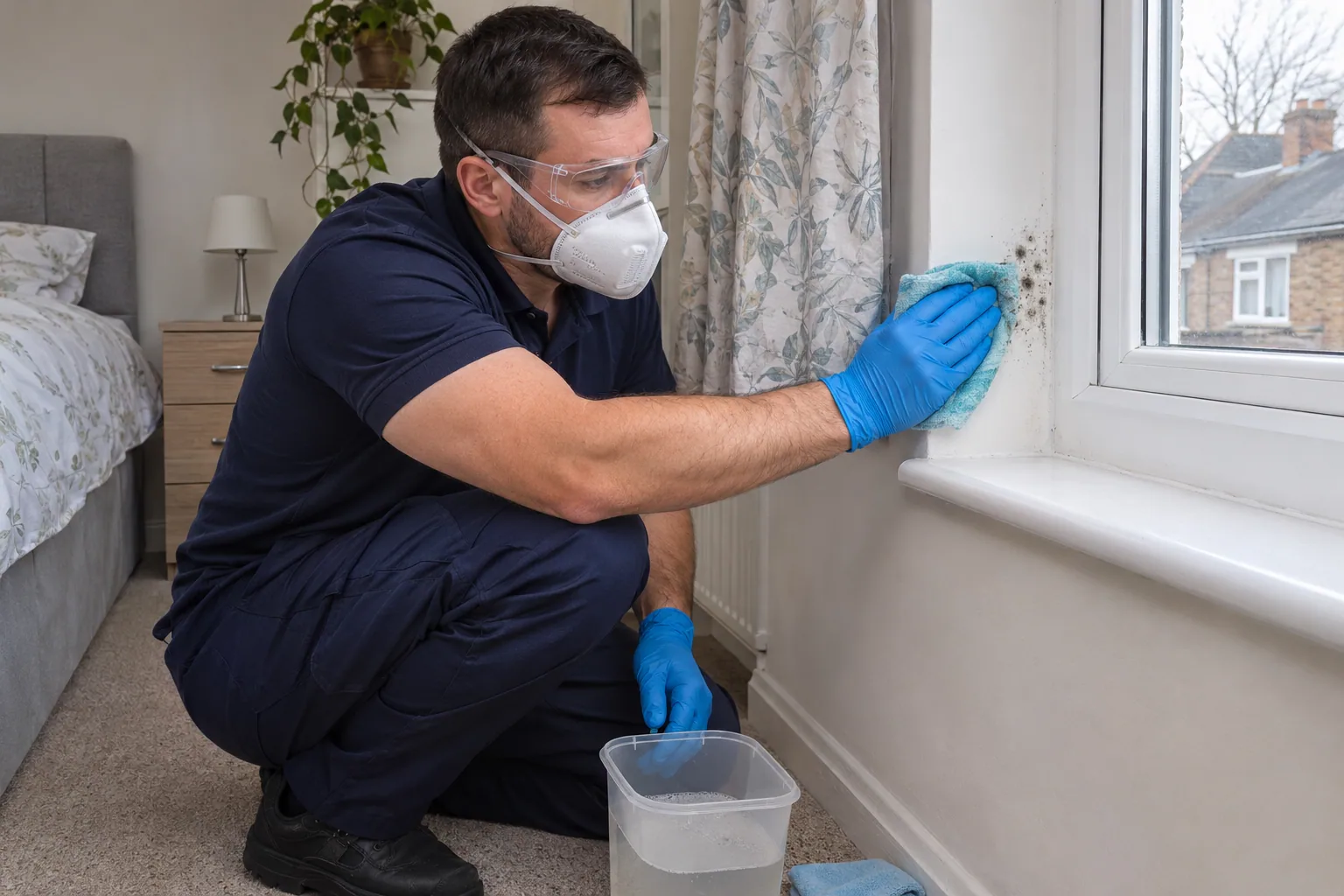
We discuss mould removal for visible affected surfaces in London properties, starting with the material, extent and condition. Tell us where it appears and whether it has returned after previous cleaning. We explain the proposed surface work and its limits before you book.
ASSESSING VISIBLE MOULD
Can you assess visible mould in my London property?
We discuss mould removal for visible affected surfaces in London properties. Send your postcode, the room, approximate affected area and material, with photographs where available. Tell us about recurring damp or an unresolved leak. We review the requested work and access before confirming whether a surface-cleaning appointment is appropriate.
MOULD AND UNDERLYING DAMP
Does removing visible mould fix the damp problem?
Surface cleaning does not repair a leak, change the building fabric or resolve an underlying damp problem. Tell us what is known about moisture and any repair work already arranged. We explain the cleaning separately, and extensive, concealed or repeatedly affected areas may need a specialist assessment beyond an ordinary surface visit.
- Visible affected area and surface material reviewed first
- Localised surface work agreed before the appointment
- Products and handling chosen for the material and task
- Cleaning kept distinct from damp repairs and redecoration
- Extensive or concealed problems identified for further assessment
Start with the affected area and the material underneath
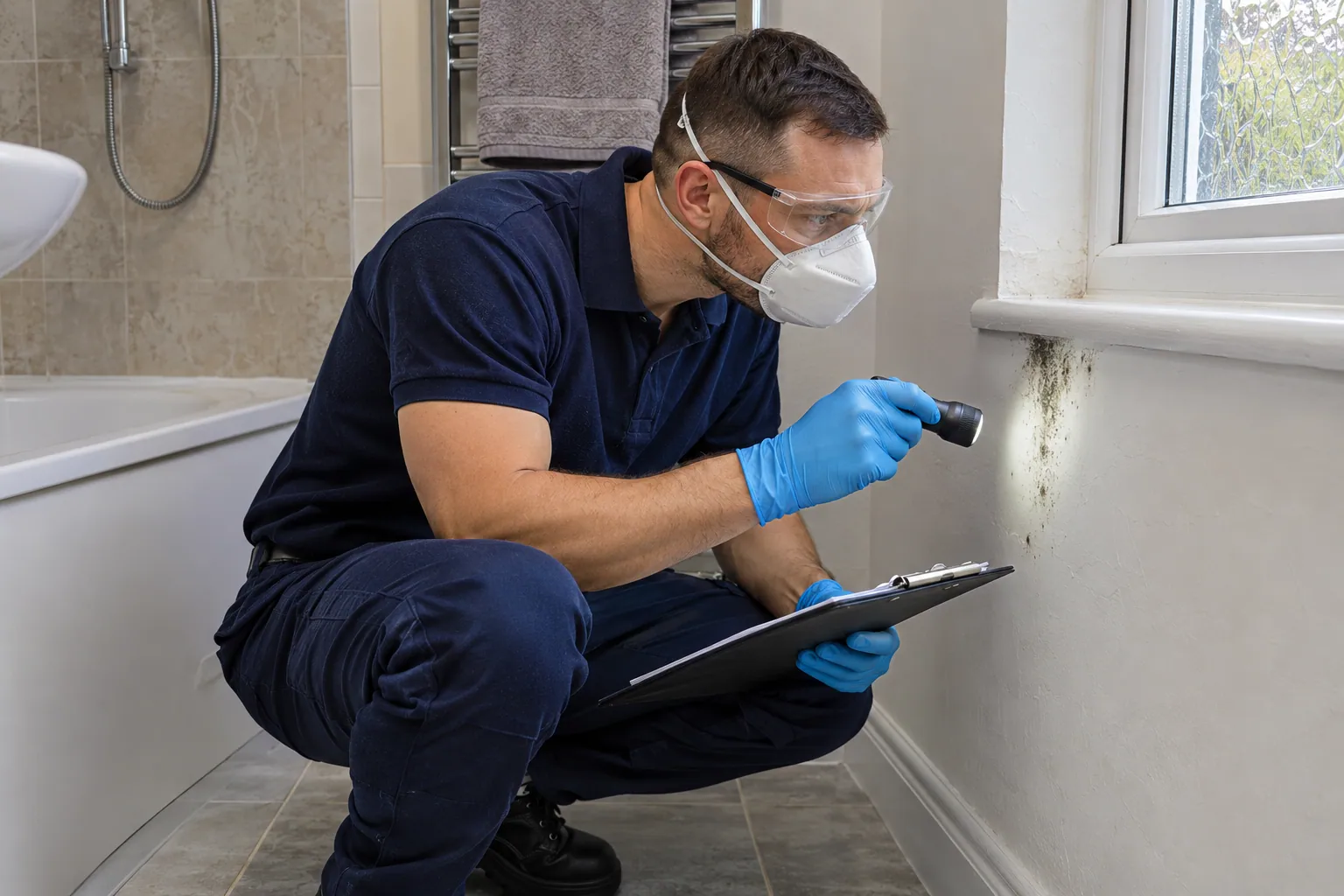
Mould removal begins with a description of the actual surface. Tell us whether the visible area is on painted plaster, tiles, a window frame or another material, and give an approximate size. Photographs can help explain its position and the condition of the surrounding finish. A small visible patch on an accessible frame is different from several affected walls, deteriorating plaster or a problem disappearing behind fitted furniture. We use those details to discuss whether the requested surface work is appropriate.
Tell us how long the marks have been present and whether they have returned after cleaning. Point out peeling paint, damaged sealant, loose wallpaper or a surface that feels or looks affected beyond the visible marks. We do not assume that every dark patch is the same problem or identify a mould species from its colour. Where the extent or condition cannot be understood from the information provided, further assessment may be necessary before a cleaning appointment can sensibly be agreed.
Visible removal and the cause of moisture are different jobs
Cleaning an affected surface does not remove the source of moisture that allowed the problem to develop. An unresolved leak, water entering the building or another damp condition needs attention from the appropriate property or building professional. Tell us about investigations, repairs and any advice you have already received. We can discuss the surface-cleaning visit alongside that information, without presenting cleaning as a substitute for understanding and addressing the underlying condition.
We do not promise that mould will never return after a single visit. If the cause remains, the surface may become affected again. In a rented property, explain who is arranging repairs and who is authorising the cleaning so the two pieces of work are not confused. We do not issue a damp survey, structural diagnosis or clearance certificate through an ordinary surface-cleaning booking. The quote should make clear which visible areas we have agreed to address and which building issues remain outside that work.
Describe the surface, not just the room
| Affected part | Information to provide | Important distinction |
|---|---|---|
| Painted wall or reveal | Approximate area, paint condition and visible damp | Surface attention does not repair plaster or repaint the wall |
| Window frame | uPVC, painted timber or other material, plus affected corners | Glass cleaning is a separate request from mould on the frame |
| Bathroom tile or grout | Exact affected material, deposits and previous products | The tile face and absorbent or damaged joints may need different attention |
| Sealant or soft material | Discolouration, deterioration and how far it extends | Cleaning is not replacement or a promise of complete removal within a material |
Windows, bathrooms and other accessible surfaces
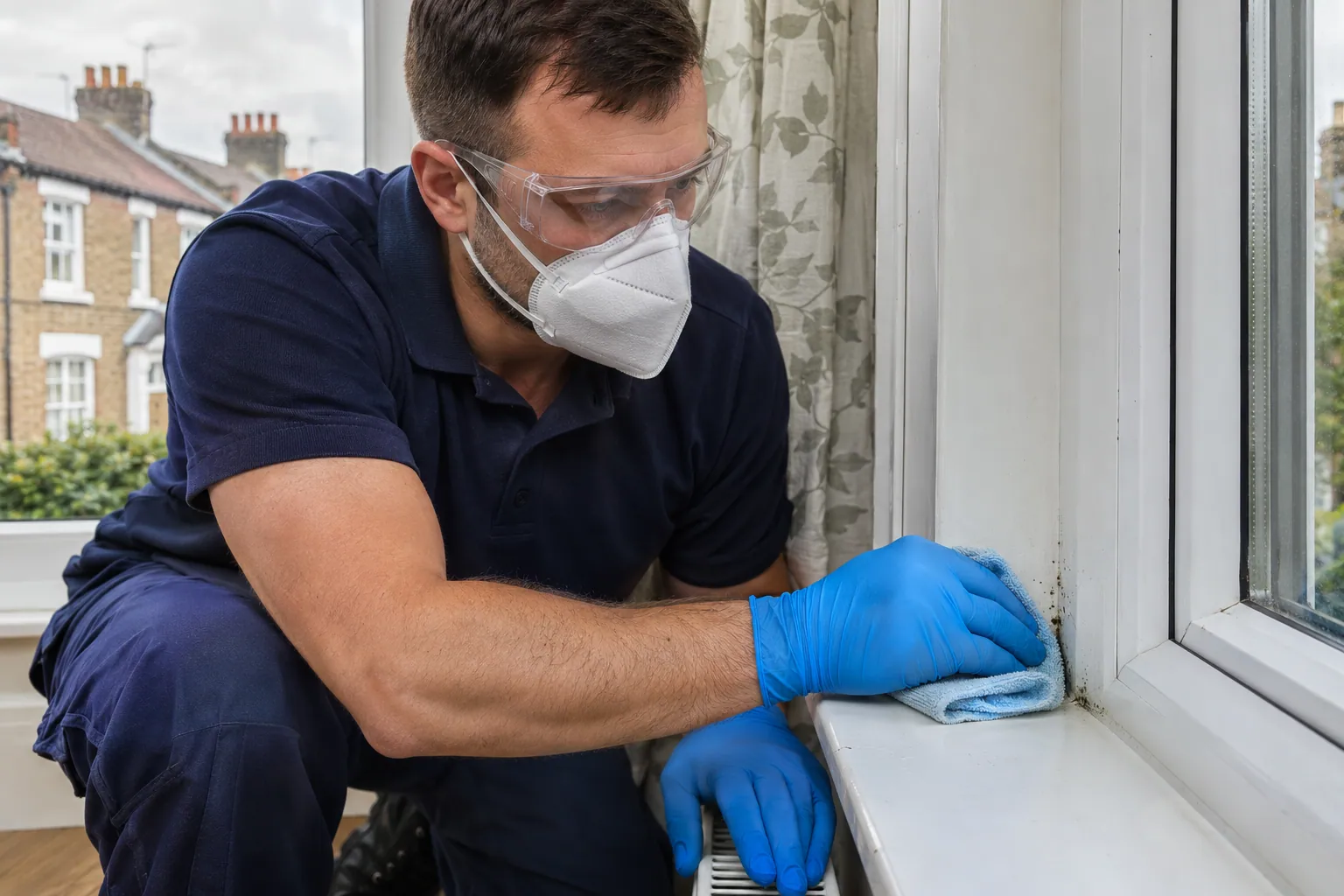
Window reveals and frames can have several materials close together: painted plaster, uPVC, timber, sealant and glass. Describe which parts are affected rather than requesting a general window clean. We consider the material and condition when discussing suitable attention. Damaged or deeply discoloured sealant may need replacement by the appropriate trade; wiping it does not renew the material. Cleaning the glass is also a different task from addressing an affected reveal or surrounding wall.
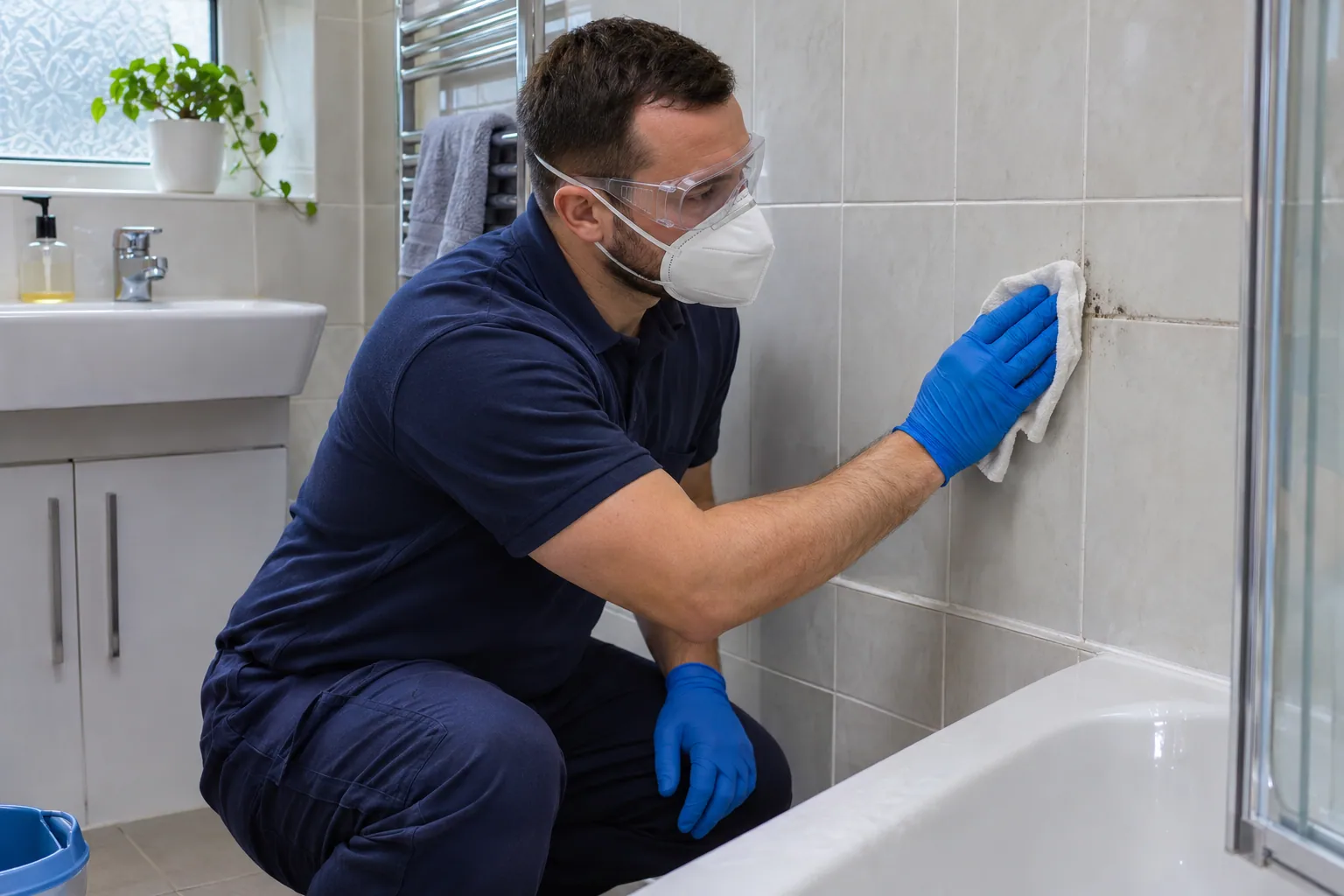
In bathrooms, tell us whether the marks are on glazed tiles, grout, a painted wall or another finish. A product appropriate for one of those surfaces may not suit the next. Absorbent or deteriorated materials can need more than surface cleaning, and we do not promise that treating the visible face will resolve contamination within a material. Identify any natural stone, delicate finish or previous product used. The method is discussed for the actual affected parts, rather than applying one universal treatment across the room.
Controlled cleaning for the assessed surface
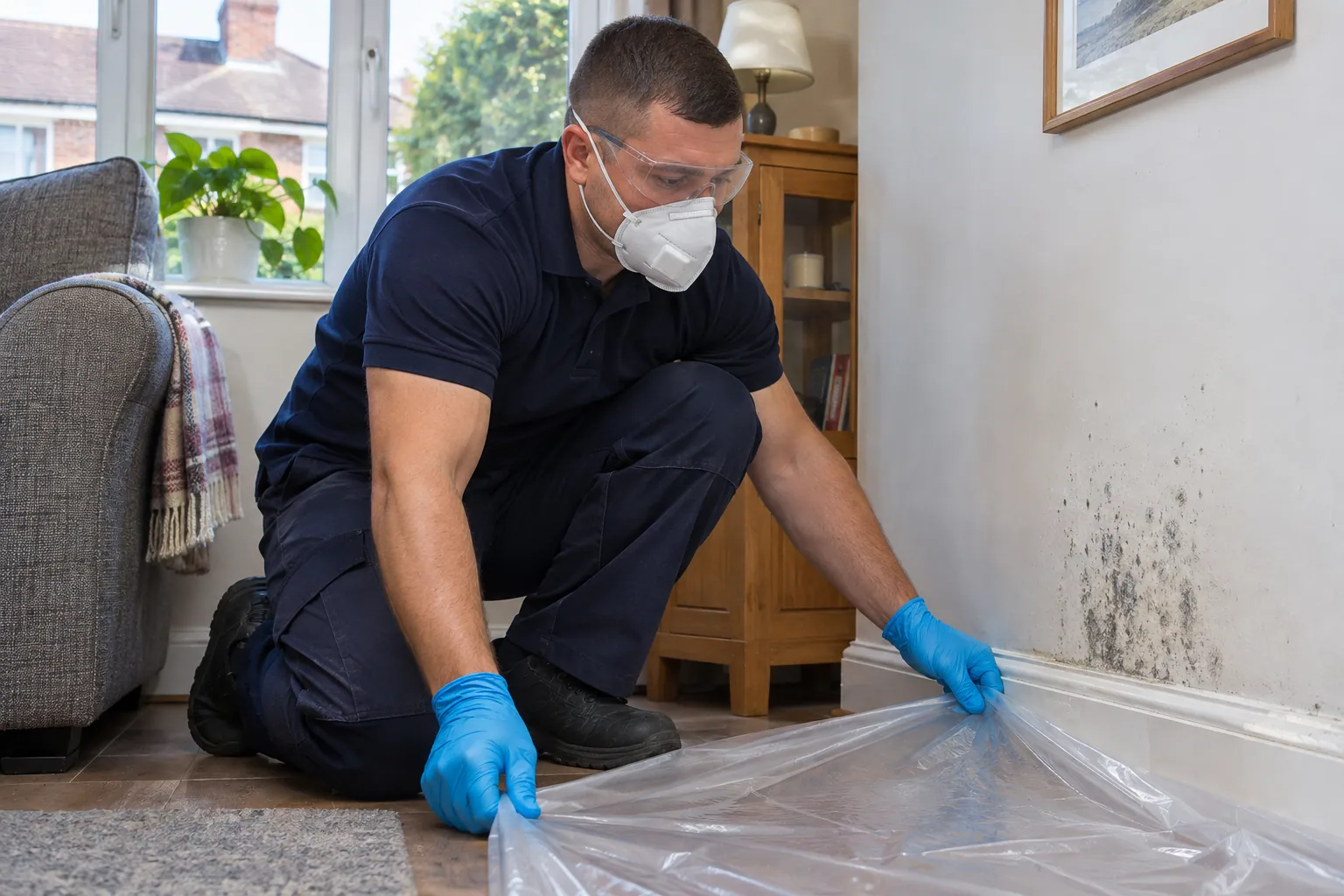
We plan the cleaning around the assessed area, the surrounding surfaces and the selected product instructions. Suitable localised surface work involves controlled handling, with relevant protective equipment and care for nearby belongings. We avoid disturbing an affected patch with dry brushing or ordinary vacuuming. We also do not promise that a bleach-based product is suitable for every wall, frame or finish. The product and its application must suit the task and material.
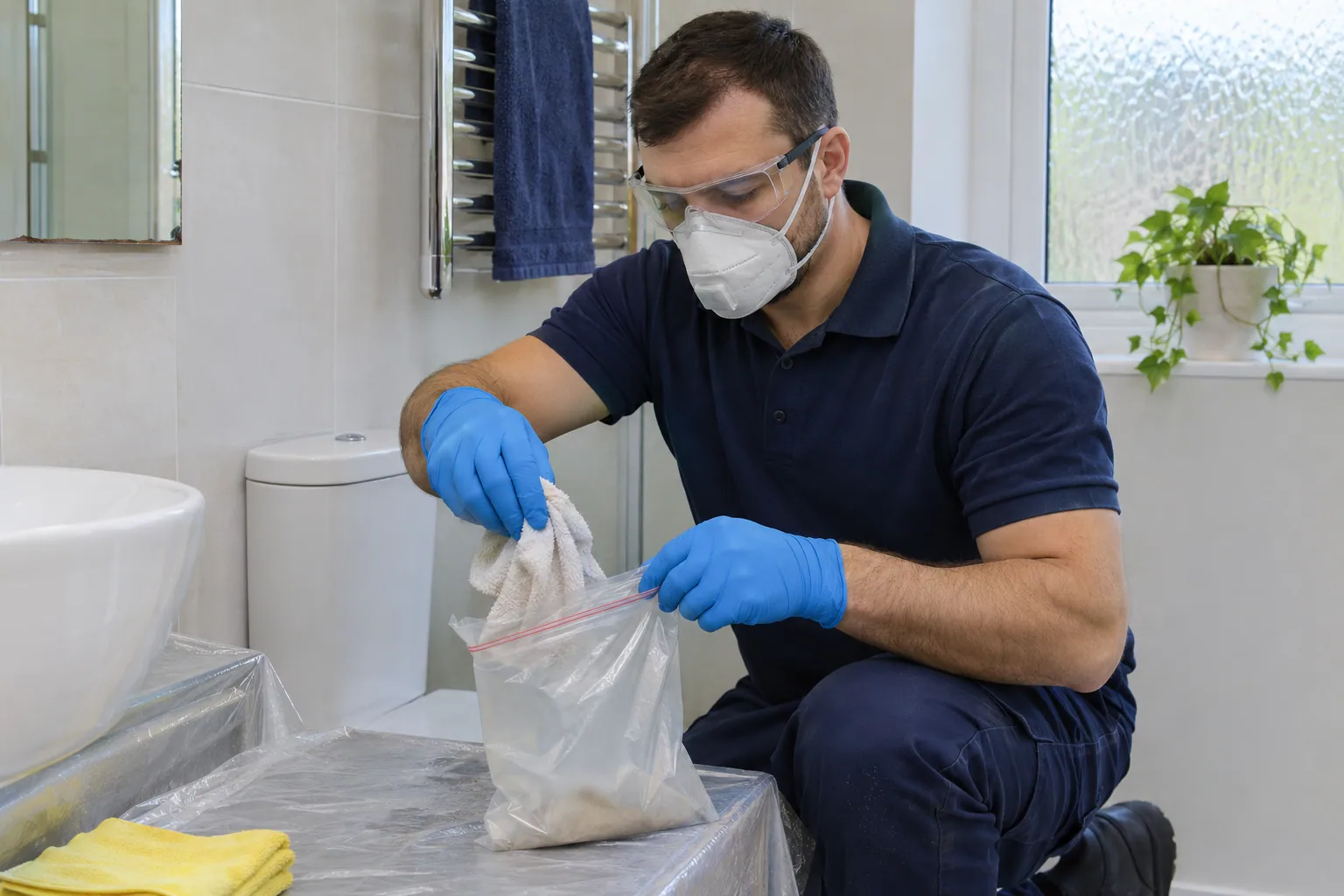
Tell us what has already been applied and avoid treating the booking as a request to combine several household chemicals. Our team needs to understand the present condition before work begins. We discuss access, preparation and the handling of used cleaning materials as part of the planned visit. The agreed work is limited to accessible surface cleaning; fogging, opening walls and wider remedial work are not included. If another process is needed, we discuss the appropriate next step before arranging the visit.
How We Carry Out Your Mould Removal
Describe the visible problem
Tell us the room, approximate area, surface material and history, with photographs if available. Explain recurrence, water damage and any unresolved moisture issue so we can review the request properly.
Review suitability and limits
We discuss whether the visible work suits a surface-cleaning appointment. Extensive, concealed or deteriorated areas may need further specialist assessment, and underlying damp or leaks remain separate matters.
Agree access and preparation
We confirm the areas and practical arrangements, including nearby belongings and access to the surface. Relevant protection and product handling follow the task being planned, without assuming furniture or fittings will be dismantled.
Carry out the suitable surface work
We use the agreed attention appropriate to the material and product instructions. The visit concerns the identified visible surfaces; it does not become an unagreed building-remediation or concealed-material treatment.
Discuss the finish and remaining issues
We explain relevant surface aftercare and any apparent staining or damage that remains. Cleaning does not certify the absence of mould elsewhere or remove the need to address an underlying moisture cause.
Cleaning and other property work
| Request or finding | What we discuss | Separate attention needed |
|---|---|---|
| Localised visible surface marks | Material, condition and suitable cleaning | Any unresolved moisture cause |
| Recurring patch after earlier cleaning | History and previous products or repairs | Assessment of the reason it returns |
| Peeling finish or damaged sealant | Limits of cleaning the visible surface | Repairs, replacement or redecoration |
| Extensive or concealed affected areas | Why an ordinary surface visit may be unsuitable | Appropriate specialist assessment and remedial planning |
When the problem needs a different level of assessment
Tell us if the affected area is extensive, appears in several rooms, is concealed behind linings or follows significant water damage. The visible marks may not show the full extent of the problem. A cleaning enquiry should not assume that hidden spaces can be inspected or treated simply by reaching the surface in front. Where there is uncertainty about concealed or extensively affected materials, a suitable specialist assessment is the appropriate next step rather than an ordinary localised cleaning visit.
We do not include removing plasterboard, lifting fitted floors, dismantling cabinetry or treating concealed ventilation systems in this surface service. Mould affecting carpets, upholstery or other absorbent items also needs separate consideration; a routine fabric clean must not be assumed sufficient. Explain any proposed strip-out or remedial building work before booking. We explain where visible cleaning ends and further specialist assessment begins. The room’s appearance alone does not establish the condition of concealed materials.
Information for a mould-removal enquiry
| Detail | What to send | How it helps |
|---|---|---|
| Location and extent | Room, position, approximate dimensions and photographs | The visible request can be understood before booking |
| History | When it appeared, recurrence and previous treatment | We can discuss the present condition and limitations |
| Property work | Known leaks, damp investigations or planned repairs | Cleaning is not confused with resolving the cause |
| Access | Postcode, furniture nearby, entry and parking | Preparation and a practical appointment can be discussed |
Preparing the visit and understanding the finished surface
Once the requested work has been reviewed, we confirm how the affected area should be made accessible. Tell us about furniture, curtains, blinds and possessions near the surface. Do not move a fitted or heavily affected item simply on the assumption that it is required for a standard booking; discuss it first. We also need the postcode, entry arrangements, parking restrictions and any limits on use of the room. These details help us plan a controlled visit to the agreed area.
Cleaning may leave staining, affected paint or another sign of material damage. It is not redecoration, sealant replacement or a promise of a newly painted finish. We explain apparent limitations and any relevant advice about the treated surface. If repairs or decorating are planned, discuss their sequence with the appropriate contractor and tell us before confirming the cleaning date. Ask our team about the agreed work if the condition changes before the visit or marks return afterwards; do not assume a repeated surface clean resolves an unresolved moisture problem.
YOUR QUESTIONS
Mould Removal Questions
Can you identify the mould type from a photograph?
A photograph helps show the location, extent and surface condition. We do not identify a species or make a statement about the whole property from its colour or appearance. If the problem requires investigation beyond visible surface work, an appropriate specialist assessment is needed.
Will mould stay away permanently after cleaning?
We do not promise that. Surface cleaning does not resolve an underlying leak, damp condition or other moisture cause. Explain recurrence and any repairs being arranged so the cleaning can be discussed separately from work needed to address why the area becomes affected.
Is bleach used on every affected surface?
No universal product is promised for every material. We consider the surface, condition and appropriate product instructions. Tell us about natural stone, timber, delicate finishes and anything already applied. The enquiry is for assessed cleaning, not a request to use the strongest chemical available.
Does the service include replacing bathroom sealant?
Sealant replacement is not included in an ordinary surface-cleaning visit. Tell us if it is damaged or deeply discoloured. We discuss what cleaning can address, while replacement and related repairs need their own appropriate arrangement.
Can you treat mould hidden behind cupboards or wall linings?
Do not assume concealed areas are included. This service concerns the suitable visible surfaces agreed for the visit. Hidden or extensive contamination can require a specialist assessment and remedial work; we do not dismantle fitted cupboards or open wall linings through an ordinary cleaning booking.
Will the wall be ready to paint immediately afterwards?
Cleaning is not a promise about immediate redecoration. The material condition, remaining staining and unresolved moisture all matter. Discuss repairs and decorating with the appropriate contractor and tell us about their schedule before booking, so the surface work can be planned in a sensible order.
THOMSONS CLEANING / LONDON & M25
Discuss mould removal for your London property
Call 020 3746 0000 or send an enquiry with the postcode, affected room, approximate area and surface material. Include photographs where available, recurrence and any known leak or damp issue. Tell us about previous products and planned repairs. We review suitability, explain the proposed surface cleaning and its limitations, and confirm the practical arrangements before booking.