
HARD FLOOR CLEANING / LONDON
Hard Floor Cleaning London
We clean suitable hard floors in London homes and business premises after assessing the material, finish and condition. Our team discusses the accessible area, tests the proposed treatment and explains whether additional protection is appropriate. Cleaning, stripping and applying a finish are distinct tasks that need a clear agreement.
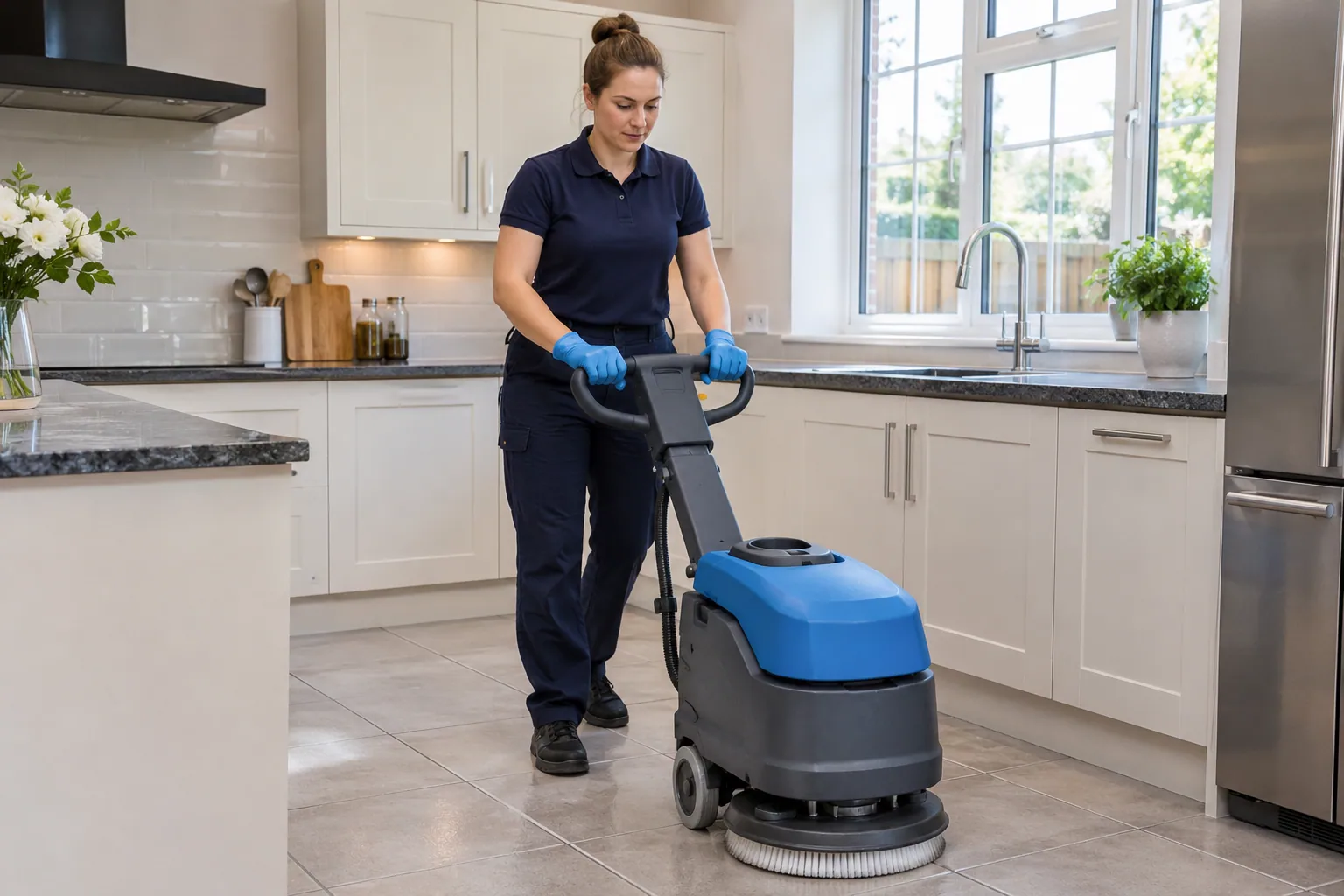
HARD FLOOR MATERIALS
Can you clean different hard floor materials in London?
We discuss hard floors including stone, tiles, vinyl and wood, with the treatment selected after assessing the particular material and finish. Send your postcode, approximate area and photographs. We do not assume that a method suitable for one floor is suitable for every hard surface in the property.
SEALING AND POLISHING
Is sealing or polishing included in every floor clean?
No. Wax, seal or polish is considered where suitable for the material and condition, and must be discussed as part of the quotation. Some floors need cleaning alone. We explain the proposed treatment and any drying or use restrictions rather than promising the same finish for every surface.
- Material and existing finish assessed first
- Loose dirt removed before suitable wet treatment
- Small-area testing guides the cleaning approach
- Rinsing and drying provided where appropriate
- Optional stripping or protection discussed separately
A hard floor is more than its visible colour
Floors that look similar can have very different materials and finishes. A pale stone tile, a ceramic tile and a wood-effect vinyl surface should not automatically receive the same product or amount of moisture. We ask what the floor is made of and whether you have installation or care information. Photographs help, but we still assess the surface and condition before selecting the cleaning approach.
Please describe where the flooring runs and whether it changes between rooms. An entrance, kitchen and corridor can contain several materials even when they form one continuous route. We record the agreed areas so the quote distinguishes each floor and its treatment. If you are unsure of the material, say so; uncertainty should be examined rather than hidden by describing every surface as tiles or simply hard flooring.
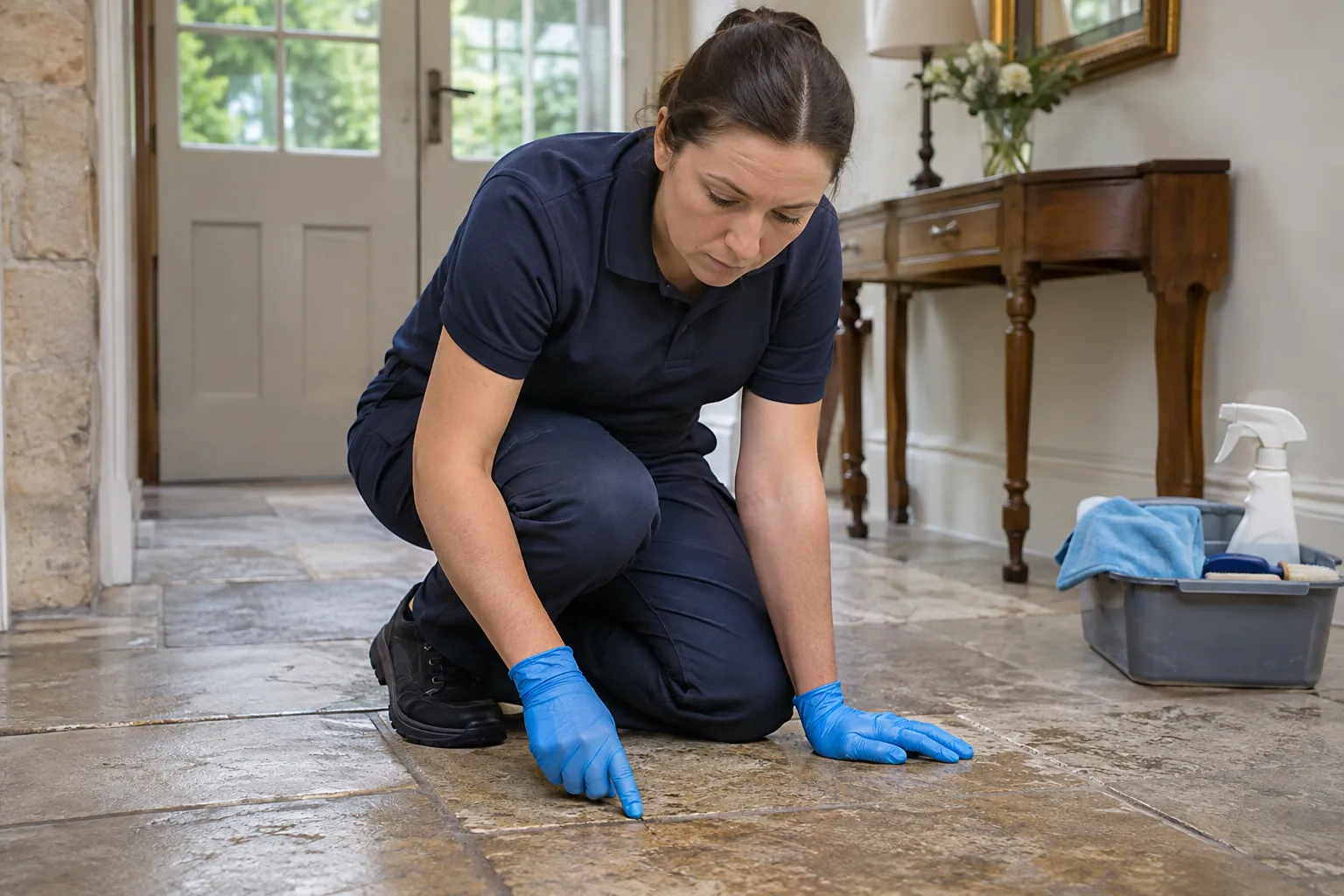
Assessment and a test before the main clean
Our cleaners look at wear, surface coatings, joints and the reported marks. We remove loose dirt with appropriate vacuuming before a suitable cleaning treatment. A small-area test helps assess the response to the chosen product. The treatment is guided by that response and the material, with any apparent limitations explained before the main work. We do not treat a successful result on one floor as proof for another finish.
Tell us about old polish, previous sealing and any household products that have been used. A patchy appearance may relate to an uneven coating rather than ordinary dirt. Loose tiles, damaged joints or lifting edges also affect the decision. Cleaning does not repair these defects, and adding more moisture or abrasion may be inappropriate. We discuss what can reasonably be achieved instead of promising that every dull patch will disappear.
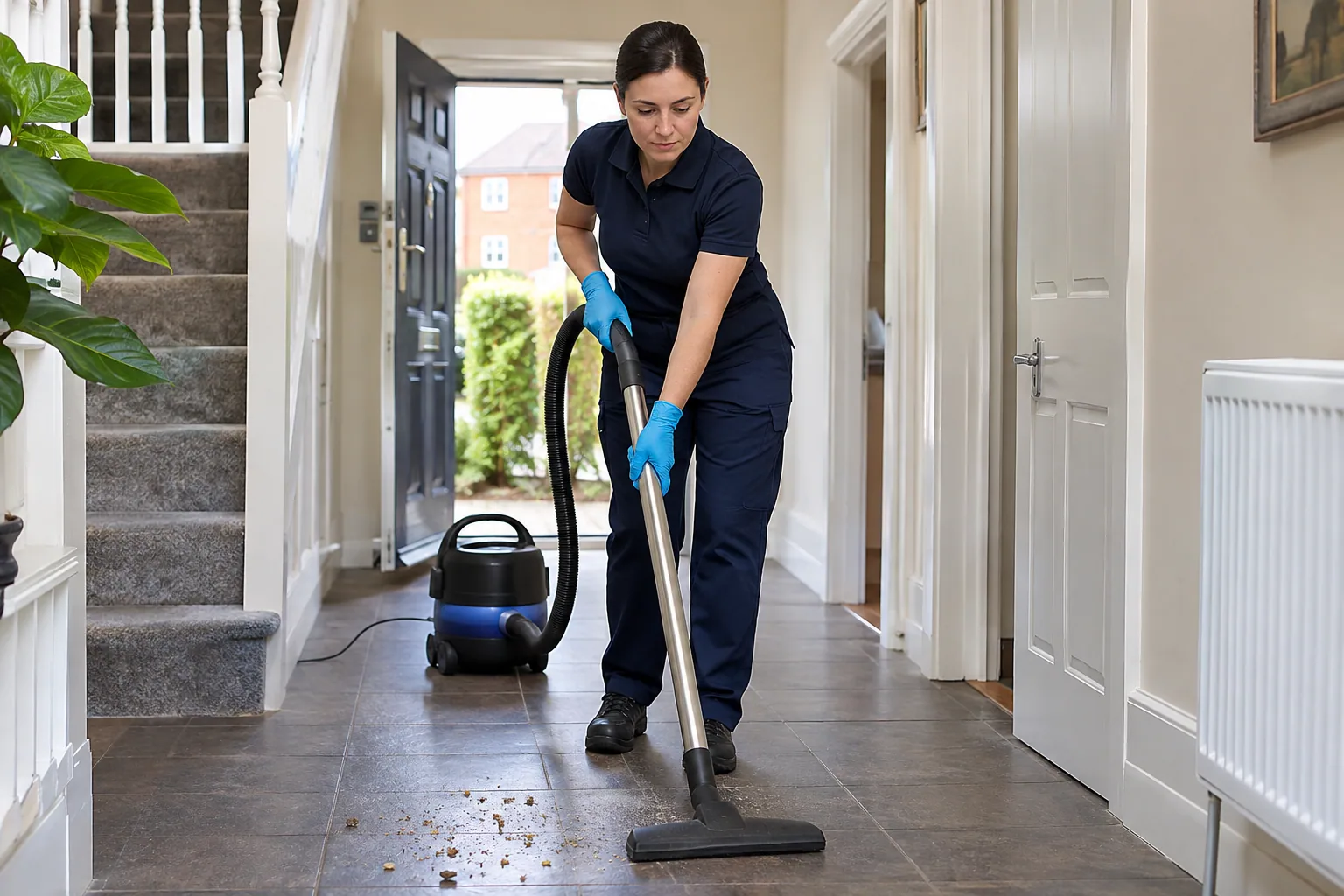
Floor details that guide the assessment
| Floor group | What to identify | Why it matters |
|---|---|---|
| Natural stone | Stone type and any existing sealer | Materials differ in response to products |
| Ceramic or similar tiles | Surface finish and grout condition | The tile and joints need suitable attention |
| Vinyl flooring | Coating, wear and previous polish | Old finishes can affect the cleaning plan |
| Wood flooring | Finish, construction and care guidance | A tile scrub-and-rinse approach is not assumed |
Suitable cleaning for stone, tiles, vinyl and wood
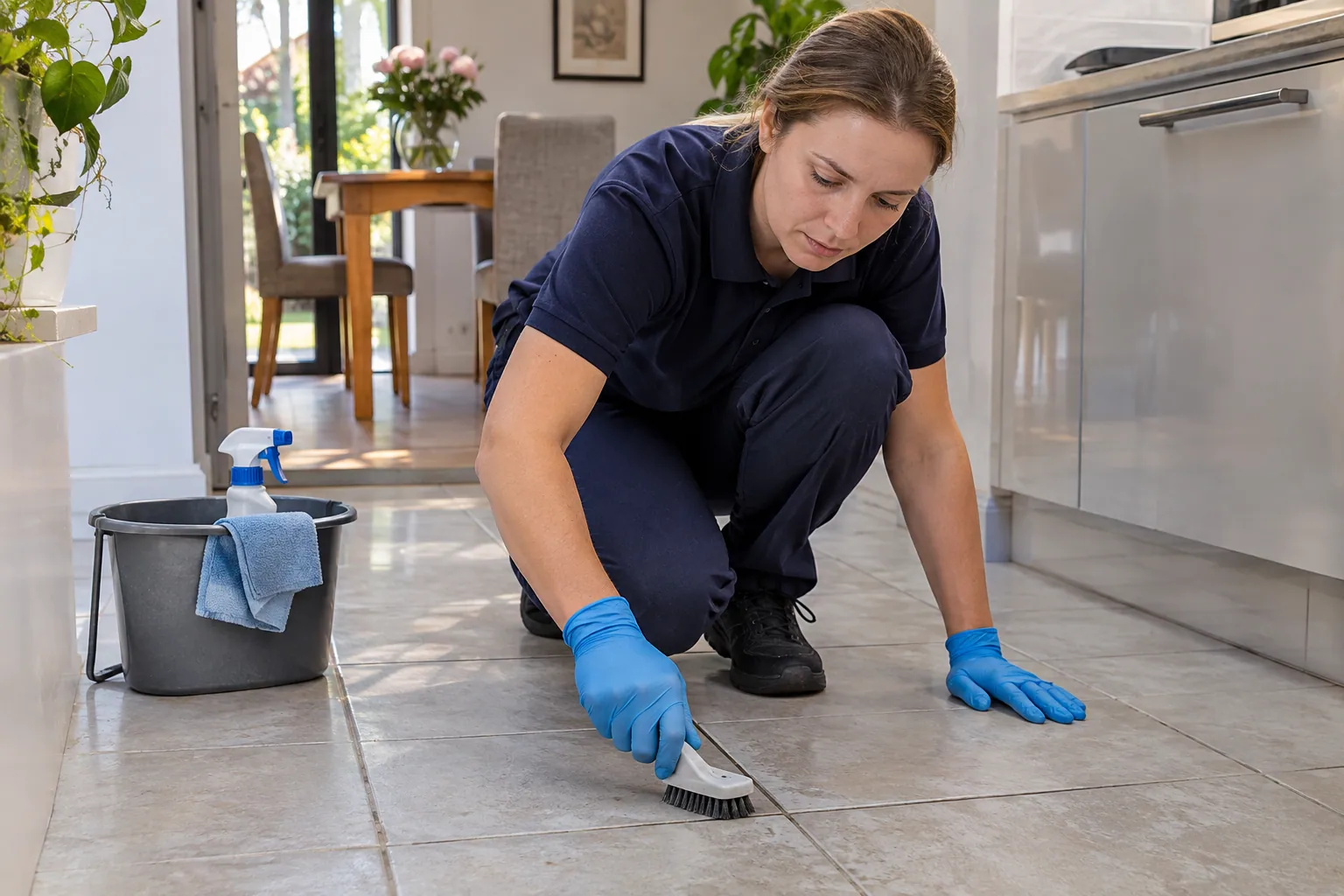
For appropriate non-wood floors, the treatment can involve applying a suitable solution and working it into the surface before rinsing and drying where needed. Tools and agitation are selected for the finish and condition. Grout lines may need their own attention, but the floor and joints must still be assessed together. Natural stone is not one uniform material, and a method suitable for one stone should not be assumed suitable for another.
Wood needs a different approach from a scrub-and-rinse method used on suitable tiles. We assess the finish and care information and discuss the appropriate treatment without promising that every wooden floor can be wet cleaned in the same way. Scratches, missing finish and worn areas remain condition issues. Our service does not imply sanding, board replacement or structural restoration simply because the floor is made of timber.
When old polish or extra protection is considered
Some floors have degraded polish that needs to be removed before a fresh finish can be considered. We discuss suitable stripping as a distinct task, assessing the existing layer and underlying material. The floor needs appropriate cleaning and preparation before any agreed product is applied. A shiny appearance alone is not enough to decide that a new coating should be placed over an uncertain existing finish.
Wax, seal or polish can be considered for suitable floors according to their material and use. For appropriate stone and grout, a suitable protective treatment may be discussed. We explain what is proposed, any limitations and the relevant aftercare. We do not promise that a finish prevents every future stain or guarantees slip prevention. The appearance and practical use of the room should both be part of deciding whether extra protection is useful.
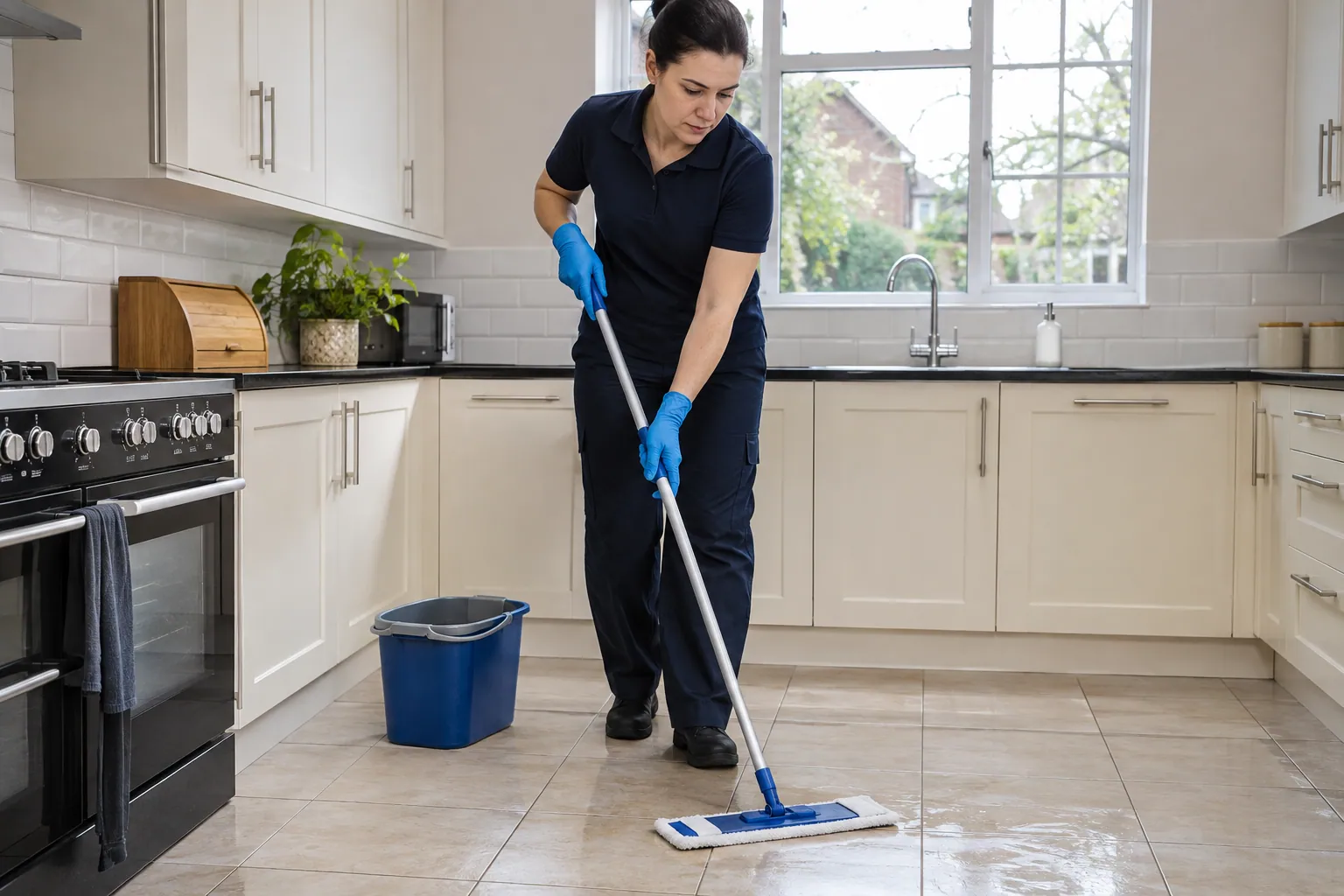
How We Carry Out Your Hard Floor Cleaning
Identify the floor and finish
We confirm the booked areas, material and known care information, then examine wear, old coatings and marks. Different floor types are considered individually, with obvious defects and uncertainties discussed before a cleaning approach is selected.
Clear and remove loose dirt
The agreed accessible area is prepared according to the furniture arrangement. We vacuum suitable floors to remove loose debris so the main treatment can focus on the surface rather than working grit and dust across it.
Test and carry out suitable cleaning
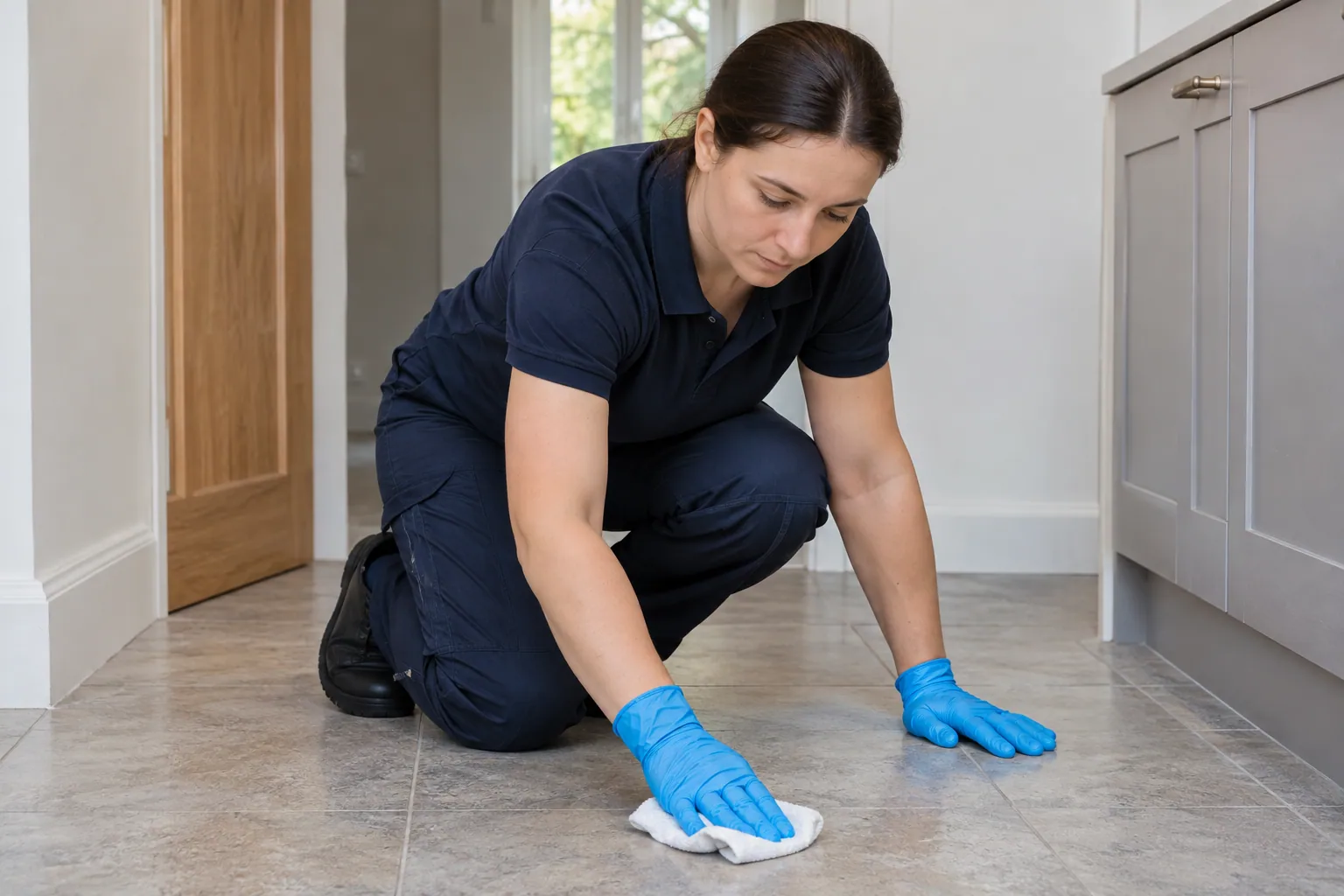
We test a small area and use the appropriate treatment for the assessed material. Suitable non-wood surfaces may be worked with cleaning solution and rinsed, while wood requires its own considered approach rather than blanket scrubbing.
Apply agreed additional treatment
Where separately agreed and suitable, we carry out the planned stripping or protective finish. Wax, seal and polish are not interchangeable or automatic additions; the choice follows the material, preparation and discussion about the floor’s use.
Explain drying and future care
We review the visible finish and any remaining wear, then explain relevant drying and use restrictions. Advice follows the actual treatment, including when to return furniture or allow traffic, rather than one exact time promised for every floor.
Cleaning and finishing are different tasks
| Task | What it addresses | What must be discussed |
|---|---|---|
| Cleaning | Suitable removal of surface soil | Material, test response and condition |
| Stripping | Appropriate removal of degraded polish | Existing coating and underlying floor |
| Sealing | Suitable protective treatment | Material, preparation and aftercare |
| Wax or polish | An appropriate agreed surface finish | Compatibility, appearance and use restrictions |
Clear access and plan the route through the property
The accessible floor area needs to be agreed before work begins. Tell us about tables, storage units, heavy appliances and fragile furniture. We discuss any furniture arrangements in advance rather than assuming everything can be moved. Clear small belongings and loose objects from the booked floor, and explain stairs, lifts and parking restrictions that affect the route for equipment into a London property.
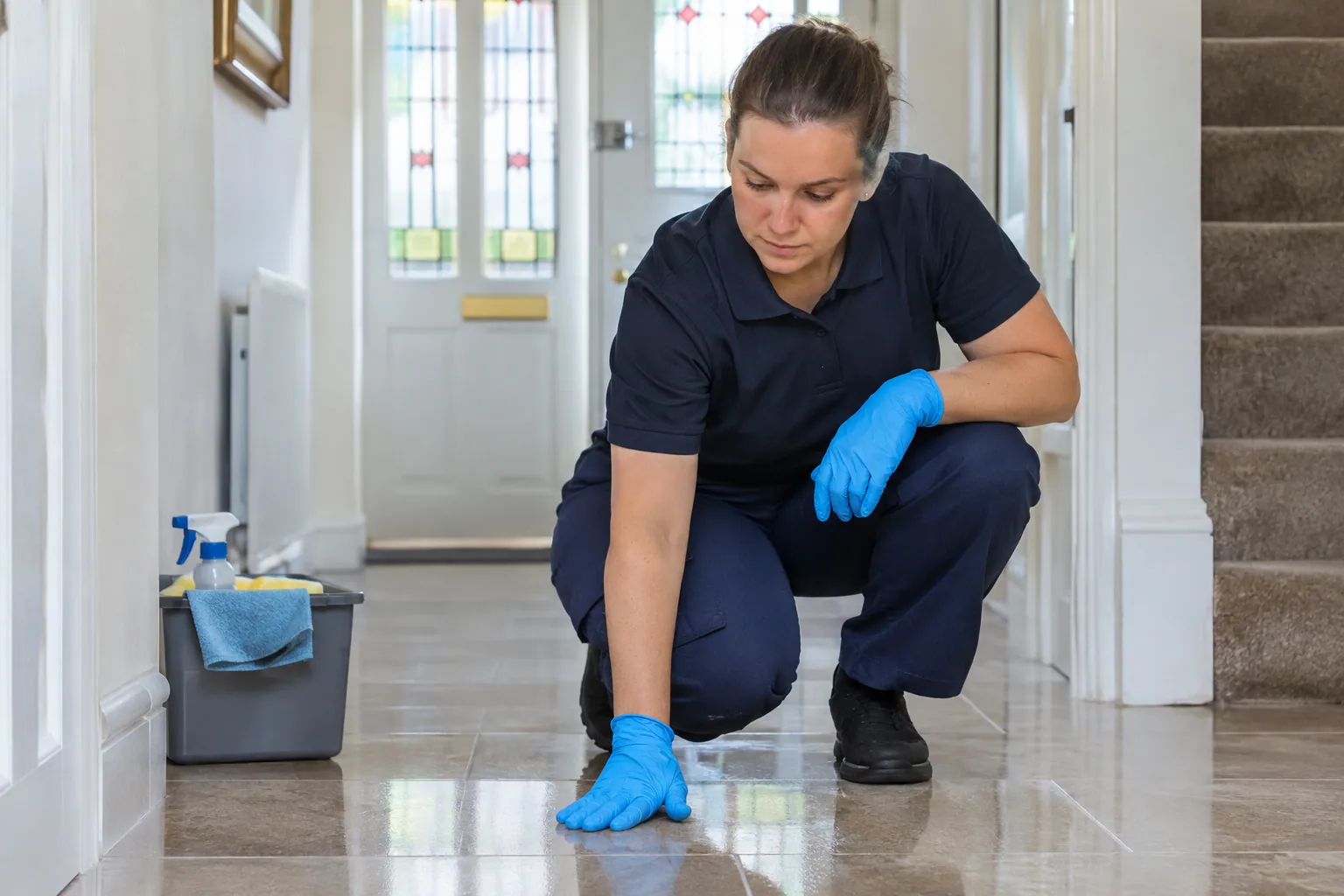
Consider how people will move through the premises while the area is being cleaned or while an agreed finish is drying. A hallway or business entrance may be the only route between rooms, so tell us about that before booking. We discuss the order of work and drying advice for the selected treatment so you can plan movement through the premises. Keep pets and unnecessary foot traffic away from the working area and follow the treatment-specific advice given by our team.
Make the floor available for treatment
| Planning issue | What you tell us | What we agree |
|---|---|---|
| Furniture | Heavy, fixed and fragile items | The accessible area and any moving arrangement |
| Main access route | Hallway or business entrance use | Practical sequencing of the work |
| Recent building work | Dust, paint or other residue | Whether additional assessment is needed |
| Returning the room to use | Traffic and handover requirements | Treatment-specific drying and aftercare |
Match aftercare and the quotation to the treatment
The enquiry should include the material, approximate area, condition and whether cleaning alone or additional protection is wanted. Send photographs of marks and old finish where useful. If building work has taken place, explain the residue rather than booking it as ordinary household dirt. For a business property, tell us how the rooms are used and when they can be made available, including access for customers or other contractors.
After cleaning, our team explains relevant drying, use and care for the selected method. A newly applied finish can require different arrangements from a cleaning-only visit, and furniture should be returned according to the advice for that treatment. We review visible results and remaining wear honestly. Your quote should make clear which areas and additional processes have been agreed, so you can plan room access, furniture and normal use around the selected treatment and its aftercare.
YOUR QUESTIONS
Hard Floor Cleaning Questions
Can every hard floor be scrubbed with the same machine?
No. Material, finish and condition guide the approach, and wood is not treated as though it were a ceramic tile floor. We assess the surface and test where appropriate before choosing suitable products and tools for the agreed areas.
Will cleaning remove scratches from my floor?
Cleaning removes suitable dirt and residue; it does not replace worn material or guarantee removal of scratches. Some marks are changes in the finish or damage. Send photographs and explain the problem so we can discuss what the cleaning may reasonably address.
Do you offer stripping of old floor polish?
We can discuss suitable stripping where degraded polish needs attention. It is a separate process that depends on the existing layer and underlying material. Tell us what has been applied previously so the proposed work can be assessed and included clearly in the quote.
Should I ask for a sealer on a tiled floor?
A protective treatment may be appropriate for some materials and joints, but should not be automatic. We assess the floor and discuss the proposed product, preparation and aftercare. The right decision depends on the actual surface rather than the broad description of tiles.
Will you move every item of furniture?
Furniture arrangements must be agreed beforehand. Tell us about heavy, fixed and fragile pieces and clear small belongings from the floor. We quote for the agreed accessible areas and do not assume that appliances, fitted units or every large item can be moved.
Can you give one guaranteed drying time?
No single time describes every floor clean or applied finish. Material, treatment and conditions affect drying and room use. Tell us about a fixed handover or opening requirement before booking, and we will discuss the practical arrangements and relevant aftercare for the proposed work.
THOMSONS CLEANING / LONDON & M25
Request a quote for your hard floor
Call 020 3746 0000 or send your London postcode, the approximate floor area and the material if known. Describe old polish, marks, furniture and any deadline for using the room again. Photographs and care information help us discuss cleaning and any optional stripping or protection. We will explain the proposed treatment, agreed accessible areas and availability before you arrange the appointment.